The challenges may look different, languages may vary, but the tools can be shared. In Accra, Ghana, a university student named Kwame opens an app on his phone. He is not a politician or a journalist. He is simply a citizen who refuses to be a spectator.

The app is called TALKAM, a global CivicTech innovation designed to combat human rights abuses and promote accountability. It empowers citizens to report violations, track cases, and enables organisations and agencies to respond effectively through a secure digital case management system.
Kwame is reporting that a neighbour’s child has gone missing. Foul play is suspected. Kwame opens TALKAM, files a detailed report with the location and time, and attaches a photo. Within hours, a local child protection agency has picked up the case. The information is being verified. Social workers are being mobilized.
Kwame did not build TALKAM. But his use of it and the thousands like him is what makes accountability work.
Democracy across West Africa is at a crossroads, fragile but fighting. Recent elections in Nigeria, Ghana, and Senegal have highlighted both the potential and the fragility of democratic systems. Citizens demand accountability, transparency, and a seat at the table where decisions about their lives are made. But institutions are slow, trust is low, and the gap between citizens and governments continues to widen. This is the ideal situation for civic technology to thrive.

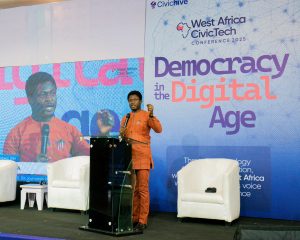
However, CivicTech is not a magic wand. It does not fix democracy overnight, but it does something equally important: it gives citizens tools to be in the know, hold power and institutions accountable. Budget tracking apps, election monitoring platforms, whistleblowing tools, and citizen reporting systems are not luxuries but necessities in a democracy that intends to survive and thrive.
Kwame in Accra did not wait for permission or for a perfect system. He used the tool available to him, a tool built by CivicTech innovators.
The uncomfortable truth is that across West Africa, brilliant CivicTech innovators are building world-class solutions, often in isolation. A CivicTech organization in Lagos creates a voter education platform. A designer in Dakar builds a civic reporting tool. A programmer in Lagos develops a budget transparency application. These are all excellent solutions, but they are being built separately, by people who do not know each other, who do not share code, who do not learn from each other’s failures or build on each other’s successes. This is siloed innovation, and it is slowing us down. Imagine the possibilities if these innovators were connected.
Imagine the platform Kwame used in Accra being deployed in Monrovia, being adapted for citizens in Conakry, a journalist in Sierra Leone learning from an open-source whistleblowing tool created in Côte d’Ivoire, or a youth movement in Burkina Faso scaling its impact using a budget tracker developed in Ghana.
That is the West Africa we are building. CivicTech challenges across West Africa share more similarities than differences. One Country’s solution could be another Country’s Shortcut. Voter apathy does not respect borders, corruption does not stop at immigration or police checkpoints, lack of public and institutional accountability is a regional pandemic, not a national one, and distrust in institutions is felt in Lagos, Dakar, Accra, Bamako, and more. This means that a solution developed in one country is almost certainly relevant to its neighbours. The code may be different, but the logic is transferable.
What we need is not more innovators building from scratch, but more innovators building on each other’s shoulders.
Strengthening the Ecosystem: Human and Capital
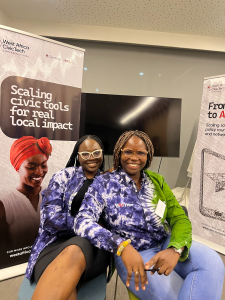
A connected CivicTech ecosystem requires two key elements: people and resources. CivicHive has helped 36 startups and over 175 organizations in West Africa improve their operational capacity and raise public awareness. Our election CivicTech tool, LiveResult, has reached more than 3.5 million users in four countries, promoting transparency in democracy beyond the Nigerian border. We understand that people are essential. This includes innovators, designers, civil society leaders, creatives, researchers, and community organizers. These individuals require training, support, and a network. We offer mentorship programs that connect seasoned professionals with new innovators and encourage cross-border learning, allowing knowledge to flow easily across West Africa.
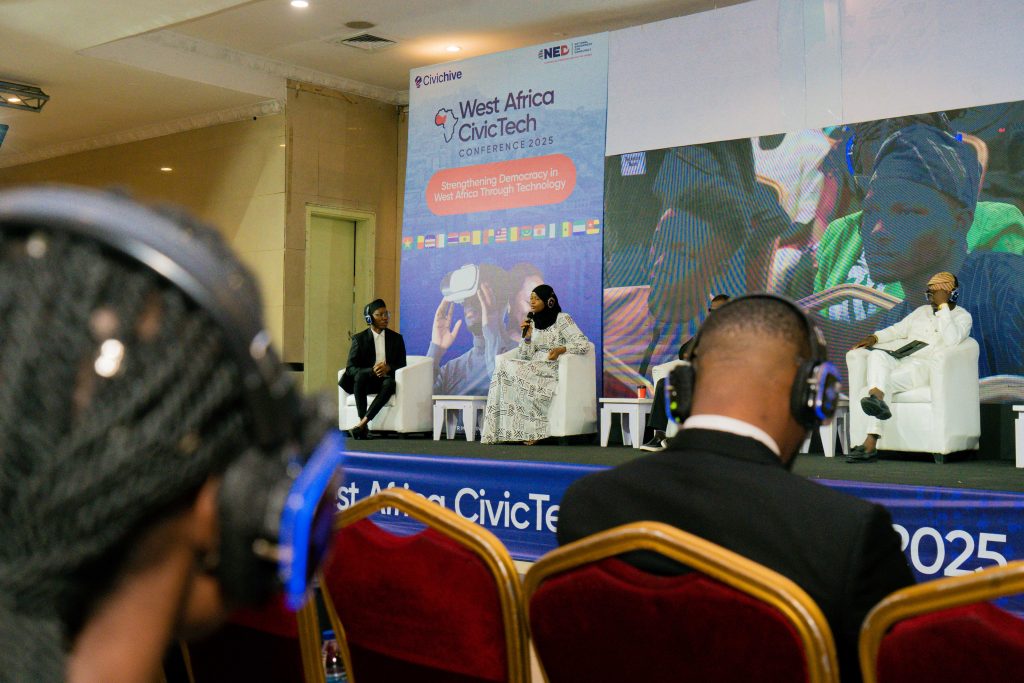
When we strengthen human and capital resources, we do not just strengthen individual organisations. We strengthen the entire ecosystem. This is why the West Africa CivicTech Conference exists. To showcase what has already been built and connect the people who are building for a better democracy.
On July 24, 2026, at the Civic Centre in Lagos, innovators from across West Africa will gather to learn, connect, and collaborate.
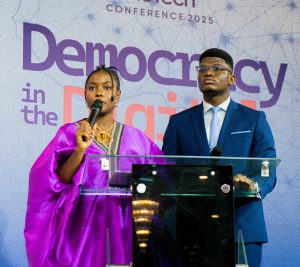

Fifteen CivicTech Fellows across Nigeria and Senegal will launch their solutions. Policymakers will sit with developers, funders will meet the next generation of civic leaders, and journalists will discover stories that matter. This is a conference you wouldn’t want to miss.
The challenges facing democracy in West Africa are too big for one organization, one country, or one innovator to solve alone. Now is the time to stop working separately and start building tools together that cross borders. We need to share knowledge that can save years of trial and error and create an environment where a solution developed in Accra today can be used in Bamako tomorrow.
Register to attend the West Africa CivicTech Conference for free. Register now at westafrica.civichive.org.