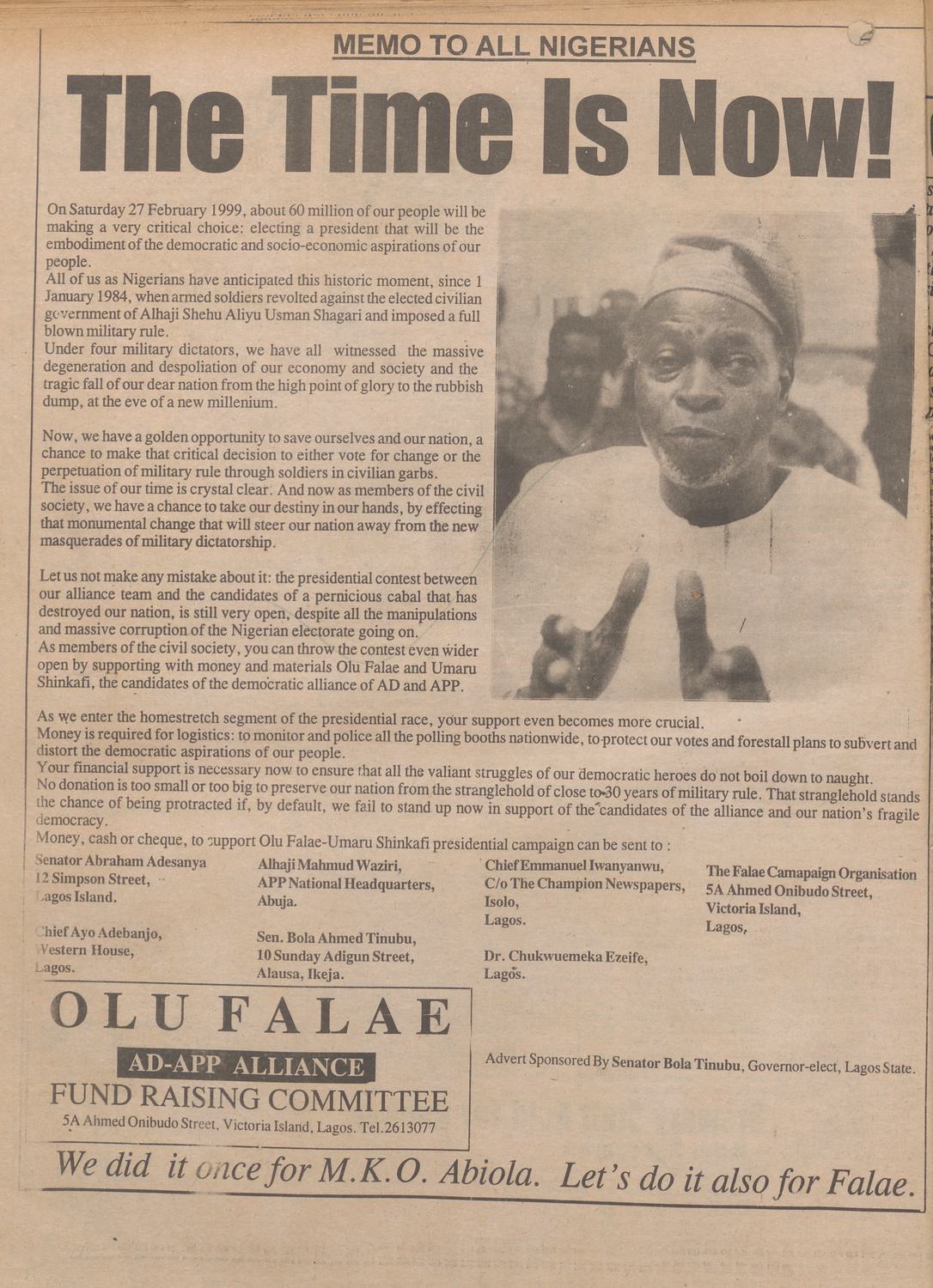
My direct experience with Nigeria’s elections began in 1999. As a National Youth Service Corps (NYSC) member serving in Katsina State, I cast my ballot for Dr. Olu Falae of the Alliance for Democracy. General Olusegun Obasanjo (Rtd) won that election with 18,738,154 votes, against Dr. Olu Falae, who received 11,110,287. He subsequently served two presidential terms.. That cycle, for me, was one of hope.
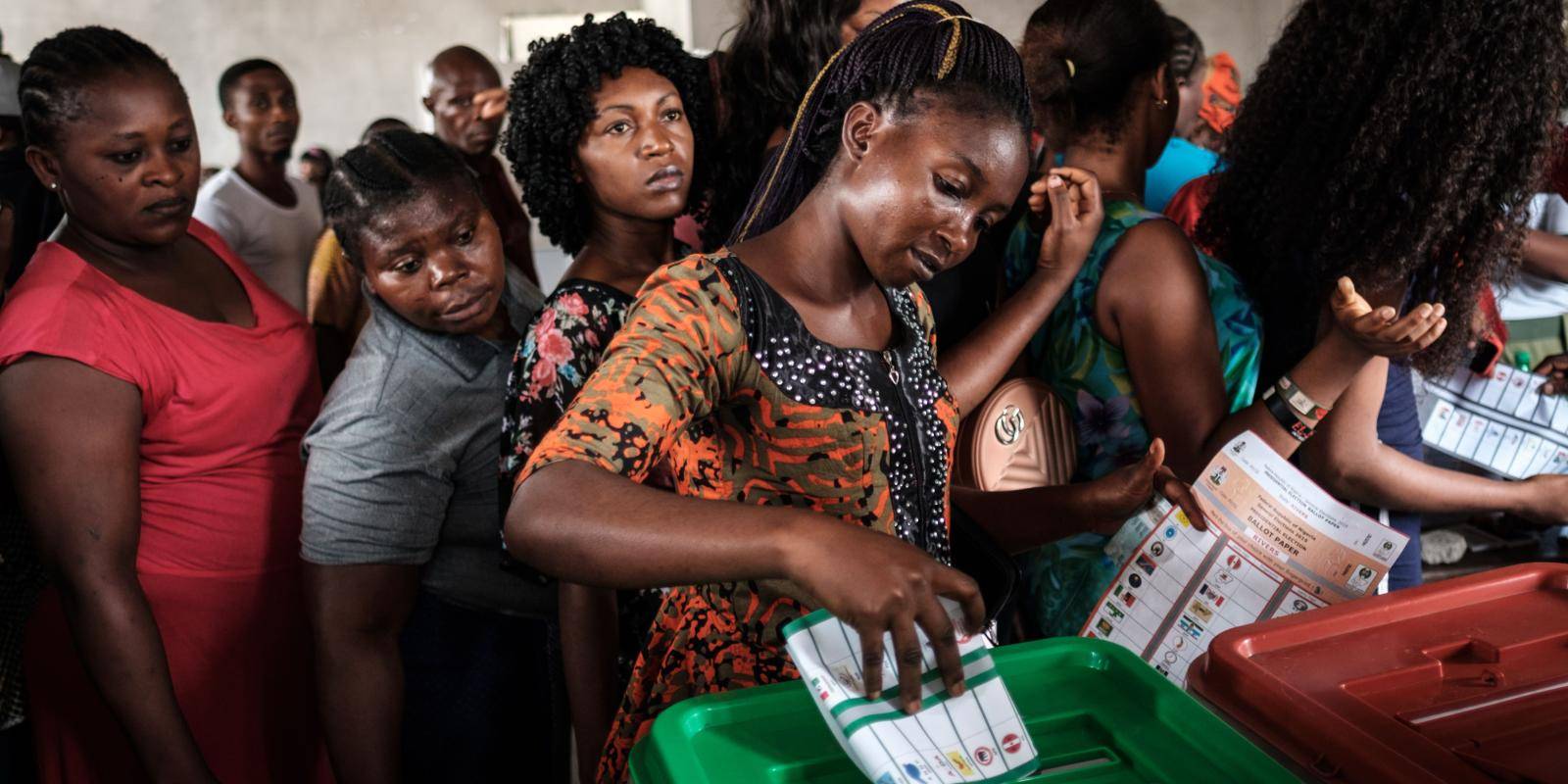
The 2003 gubernatorial election in Lagos marked a stark shift. At my local polling unit, I witnessed voters openly thumbprinting stacks of ballot papers- a brazen act that revealed the system’s vulnerability. For years, subsequent elections followed this troubling pattern.
A gradual change seemed to arrive with the Permanent Voter Card (PVC), the Bimodal Voter Accreditation System (BVAS), and stronger measures against electoral thuggery. The 2015 and 2019 elections were widely seen as benefiting from these technological and procedural advances, fostering a cautious optimism.
Today, however, my optimism is subdued. The political landscape feels increasingly tilted, with defections to the ruling All Progressives Congress (APC) fueling talk of a de facto one-party state. The opposition—fragmented and lacking cohesion—seems unprepared to mount a credible challenge for 2027. Most concerning is the disillusionment of young Nigerians, whose energy is vital for democratic renewal.
- The Great Divide: How Young People View Elections vs. The Reality
From social media chatter to campus debates, a clear youth perspective emerges. Young, urban, and digitally-engaged Nigerians believe elections should be won on data-driven campaigns, compelling manifestos, and grassroots mobilization. They cite movements like #EndSARS as proof of a “New Nigeria” ready to vote on issues: unemployment, insecurity, and governance.
Yet, evidence from the field reveals a different, more entrenched reality. Elections are still predominantly won through a mix of:
- Clientelism & Patrimonial Politics: The direct exchange of money, food, or promises for votes; “stomach infrastructure.”
- Ethno-Religious Mobilization: Voting along deep-seated identity lines, often orchestrated by political elites.
- Control of State Machinery: Incumbents leveraging public resources, security agencies, and traditional institutions for advantage.
- Voter Suppression & Violence: Creating fear and apathy in volatile regions to skew outcomes. Nigeria’s long-standing history of election-related violence persisted during the 2023 polls. While official casualty figures have not been released by the police or electoral commission, estimates vary: a newspaper reported 39 deaths, whereas the European Union cited 21 during a media briefing. Violence disrupted voting in several states across the country, including Lagos, Delta, Kogi, and Kano, as well as Enugu and Ebonyi. The European Union Election Observation Mission also confirmed that in some areas, clashes and unrest significantly disturbed the voting process (The Conversation, 2023).
- Legal & “Technical” Manipulation: Where the ballot box fails, the courtroom becomes the final battleground. For instance, in 2023, Nigeria’s Court of Appeal, serving as the Presidential Elections Tribunal, commenced hearings on petitions disputing the declaration of Bola Ahmed Tinubu of the ruling All Progressives Congress (APC) as the victor in that year’s presidential election. The poll was tainted by widespread irregularities, such as violence at polling stations and significant logistical and procedural failures, most notably, the failure to transmit results from polling units in real time (Ewang, 2023).
This glaring clash between digital-age ideals and analogue-era tactics fuels the intense disillusionment witnessed every electoral cycle.
- Inside the Machine: How Politicians and Parties Actually Win Elections
No matter how lofty youth aspirations are, entrenched political machinery runs by its own internal logic, turning preparation into a two-tiered exercise: a polished public face of rallies, manifestos, social media campaigns, and youth outreach, alongside a far more decisive ground game where real power is secured.
This “real preparation” involves winning primaries and tickets through financial muscle and elite negotiations rather than popular party support; producing candidates beholden to godfathers instead of constituents, while also structuring inducement logistics for agents, community leaders, and security operatives, assembling a legal war chest of top SANs for inevitable election petitions, and engaging in pragmatic coalition-building that co-opts influential actors with promises of patronage rather than shared ideology.
A perplexing phenomenon is how ordinary citizens, often not party members, become ardent supporters—campaigning online, attending rallies, and even acting as disruptive agents for these structures. This highlights the complex interplay of hope, identity, and survival within the electorate.
- The Umpire’s Challenge: INEC’s Credibility and the 2027 Prospect
Overseeing this fraught process is the Independent National Electoral Commission (INEC). Historically, INEC has struggled with operational independence, logistical efficacy, and public trust, often buckling under immense political pressure.
The 2023 election was a pivotal moment of promise and letdown. With the new Electoral Act 2022, the INEC Results Viewing Portal (IReV), and BVAS, credible elections seemed within reach. However, the failure to mandate the transmission of election results to the IReV in real-time became the symbolic collapse of public trust. While BVAS improved accreditation, the old, vulnerable loophole of manual collation remained.
As 2027 approaches, the outlook is cautious. Restoring confidence hinges on:
- INEC’s Leadership: The Chairperson must demonstrate undeniable neutrality.
- Political Will: Will the government fund INEC fully and, crucially, allow it to operate independently?
- Learning from 2023: Making the IReV/BVAS process seamless, mandatory, and legally foolproof through all collation stages is non-negotiable.
- The Accountability Tightrope: Technology, Trust, and Human Interference
At the core of this is mandatory electronic transmission of results.. It is the single most crucial accountability measure, designed to curtail the “black box” of manual collation where figures are altered. Without this, the legitimacy of any declared winner remains in question.
The brutal truth, however, is that technology is only as good as the humans operating it. BVAS machines can fail; networks can be poor. More critically, officials can be pressured, bribed, or threatened not to “transmit.” Technology solves technical glitches; it cannot solve a lack of political will or institutional capture.
This is where Civic-Tech/Gov-Tech becomes vital—not as a panacea, but as a critical catalyst. Its value lies in:
- Transparency & Observation: (e.g., Yiaga Africa’s Watching The Vote, CUPS’s situation rooms, CivicHive’s LiveResult Platform)
- Citizen Engagement: Simplifying access to voter information and results tracking: (e.g EiE’s RSVP)
- Building a Parallel Narrative: Through Parallel Vote Tabulation (PVT), providing statistically rigorous evidence to challenge or validate official results.
- Shifting Norms: Cultivating a generation that demands transparency, thereby raising the cost of manipulation.
- Synthesis: The Critical Crossroads for 2027
Nigeria’s electoral system is a battlefield between an analogue, patronage-based political culture and a digital, accountability-seeking civic force. Technology is an essential tool, but the war’s outcome will be decided by political culture, institutional integrity, and judicial courage.
For 2027, the key questions are:
- Will electronic transmission of results be made legally mandatory and practically foolproof?
- Will INEC’s leadership demonstrate unassailable independence?
- Will Nigeria’s youth channel their disillusionment into sustained engagement—not just online, but at polling units and in the meticulous observation of the electoral process?
The future lies not in choosing between technology and human processes, but in embedding technology so deeply that it forces human actors toward accountability. The journey from that polling unit in Katsina in 1999 to the nation’s decision in 2027 will depend on it.
Joseph Amenaghawon is Acting Country Director, BudgIT Foundation and Head, CivicHive
References
The Conversation. (2023, May 3). Nigeria’s elections faced five serious challenges – how to fix them before the next polls. https://theconversation.com/nigerias-elections-faced-five-serious-challenges-how-to-fix-them-before-the-next-polls-203697
Electoral Geography 2.0. (2007, September 6). Nigeria. Presidential election 1999. Electoral Geography 2.0. https://www.electoralgeography.com/new/en/countries/n/nigeria/nigeria-presidential-election-1999.html
Ewang, A. (2023, May 9). Nigerian Court to Hear Challenges Against Presidential Election Result. https://www.hrw.org/news/2023/05/09/nigerian-court-hear-challenges-against-presidential-election-result